

TL;DR
If you have had headaches for months or years and your medications are not controlling them as well as they used to, the diagnosis itself may be the question, not the treatment. Most headaches in adults are primary (migraine, tension-type, cluster), but a meaningful share of long-standing or treatment-resistant headaches turn out to be secondary, meaning caused by an underlying condition that imaging or specialist examination would identify. A neurologist's structured exam, combined with imaging only when indicated, is the standard way to make this distinction. An independent US neurologist review of your records can tell you whether your current diagnosis fits the international evidence, or whether further workup is warranted.
---
The clinical moment
You have had headaches for years. Your local physician diagnosed migraine, prescribed a triptan or a preventive medication, and the headaches improved for a while. Now they are coming back, or they feel different. Maybe they are waking you up at night. Maybe the location has shifted. Maybe a medication that used to work is no longer helping. You went back to your GP. The dose was increased, or a new class was added. The pattern is not changing the way you expect.
This is the situation patients in India most commonly describe in neurology second-opinion requests. The question is rarely "are these migraines real?" The question is "is the diagnosis still right, given how things have changed?"
---
What the evidence says
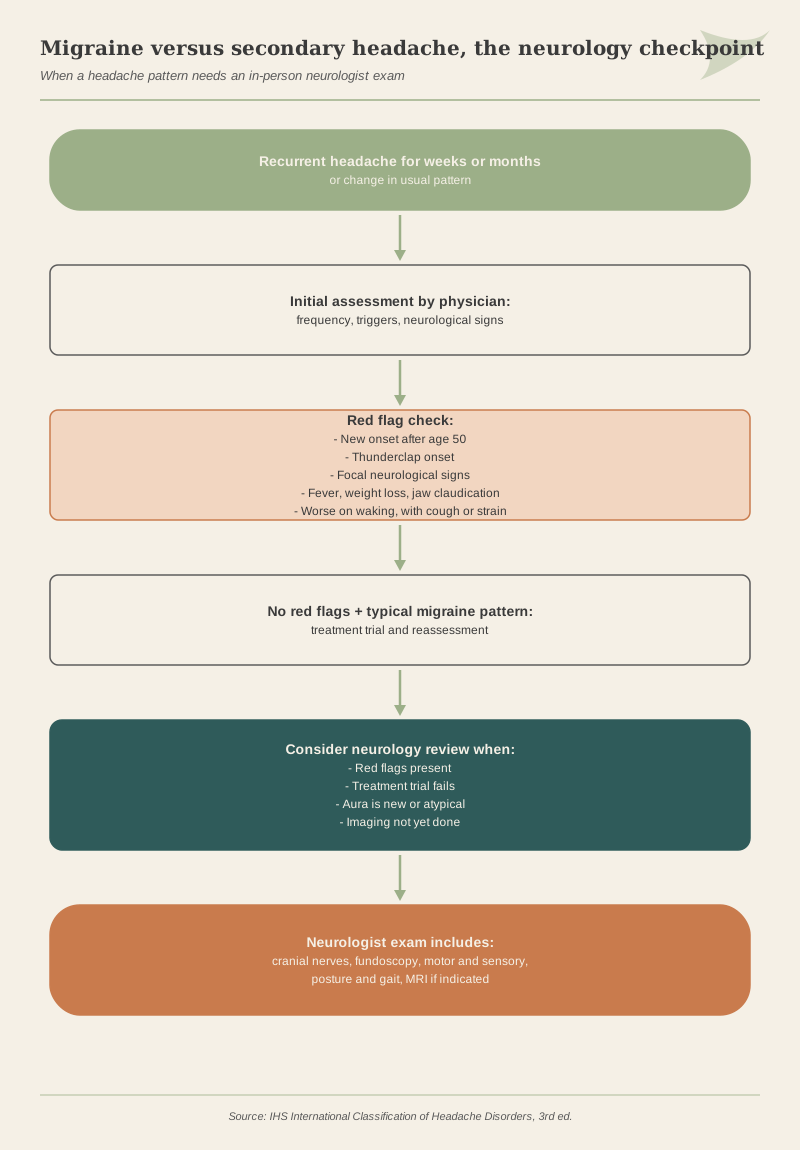
Primary versus secondary headache
The international classification of headache disorders, now in its third edition (ICHD-3, published in Cephalalgia in 2018), divides headache into two broad categories.
**Primary headaches** are headaches where the headache itself is the disease. Migraine, tension-type headache, and cluster headache are the most common. They are diagnosed by history and examination, not by imaging. In most patients, imaging is normal.
**Secondary headaches** are caused by an underlying condition. The list of possible causes includes brain tumours, aneurysms, vascular malformations, sinus disease, increased pressure inside the skull, infections, and several others. Secondary headaches are diagnosed by identifying the underlying condition, which usually requires imaging or targeted testing.
The two categories overlap clinically. A patient with a known history of migraine can develop a brain tumour. The new tumour may present with headaches that feel similar to the patient's old migraines at first. This is why a structured neurological evaluation matters when the pattern of a long-standing headache changes.
The red flag system
Neurologists use a checklist called SNNOOP10 to identify when a headache should trigger a workup for secondary causes. The list was published in Neurology in 2019 by Do and colleagues and includes ten categories of warning signs. The most important ones are:
- check_circle**S**ystemic symptoms including fever, weight loss, or signs of cancer or immune compromise
- check_circle**N**eurologic signs or symptoms that are new, including weakness, numbness, vision change, or change in mental status
- check_circle**N**ew onset of headache in a person over 50
- check_circle**O**ther change in pattern, frequency, or severity of an existing headache
- check_circle**O**ccurrence of headache after head trauma
- check_circle**P**apilledema (swelling of the optic nerve seen on eye examination)
- check_circle**P**rogressive headache with atypical features
- check_circle**P**ainful eye with vision changes
- check_circle**P**ainful side of head with localised tenderness
- check_circle**P**regnancy or postpartum
- check_circle**P**athology of immune system or cancer history
- check_circle**P**ainkiller overuse (medication overuse headache)
The point of the list is not to alarm patients with long-standing migraines. It is to make sure that a change in pattern in a long-standing headache is taken seriously, not assumed to be the same condition.
What the neurological exam adds
A neurological exam is not a vibe check. It is a structured sequence of tests of the cranial nerves, motor and sensory systems, reflexes, coordination, and gait. The exam takes about 10 to 15 minutes when done thoroughly. It frequently identifies subtle findings that change the differential diagnosis or the choice of next test.
The American Academy of Neurology practice parameter on neuroimaging in headache, published in Neurology by Frishberg and colleagues, makes the case for the exam this way: in patients with chronic recurrent headache and a normal neurological exam, the yield of routine neuroimaging is low. But in patients with an abnormal exam, or new neurological symptoms accompanying their headache, neuroimaging changes management often enough to be the standard of care.
The catch is that the exam needs to be performed and documented, and not every primary care visit allows for a 15-minute structured neuro exam. This is part of where the gap between primary care and neurology evaluation lives.
Why this matters specifically in the Indian context
India has a high prevalence of headache disorders, similar to global averages. The country also has a heterogeneous primary care system where access to a neurologist can be delayed by months or years. When a familiar pattern starts changing, the practical step inside a 10-minute consultation is often to adjust the medication class, because reassessing the underlying diagnosis takes a longer structured visit than the primary care slot allows.
A second opinion in this situation is not about choosing a different medication. It is about whether the diagnosis still fits, whether a neurological exam has been performed and documented recently, and whether any imaging is now indicated based on changes you may have noticed but not been asked about.
---
What this means for your case
A neurology second opinion is most useful when one or more of the following apply:
- check_circleYou are over 50 and the character of your headaches has changed in the last 12 months
- check_circleYou have a new headache that is different from any headache you have had before
- check_circleYour medication is no longer working as well, or you are taking pain relief medication more days than not
- check_circleYou have noticed any neurological symptom along with the headache, including numbness, weakness, blurred vision, change in speech, or change in coordination
- check_circleA close family member has noticed something different in you, even if you have not
- check_circleYour headache wakes you up from sleep
- check_circleYou have a history of cancer, immune compromise, or recent head injury
Questions worth asking your physician include:
- check_circleWas a structured neurological exam performed and documented at my last visit? What were the findings?
- check_circleHas any imaging been done in the last 5 years? If yes, what did it show and how was it interpreted?
- check_circleGiven that my pattern has changed, what is the differential diagnosis you are currently considering?
- check_circleAre there features of my headache that would normally trigger a referral to a neurologist?
A specialist review in this area would typically assess your headache history in detail, the documented results of any prior exams or imaging, the current medications and dosing, and whether the pattern fits the diagnosis on the chart.
---
What a US specialist review evaluates
A neurology educational review through Tidbit is a structured assessment of the records and history that drive a headache diagnosis. The reviewer is a US board-certified neurologist in active practice at a major American academic medical center. The review covers your headache history (frequency, character, triggers, response to treatment), the documented findings from any prior neurological exams, the results of any imaging or laboratory testing, and your current medication regimen and adherence.
The review produces a written educational document that summarises what the records show, what the current ICHD-3 criteria and AAN guidance say about your situation, whether the differential diagnosis on the chart accounts for the changes you have described, and what questions you might raise with your treating physician about next steps.
The review is educational. It does not produce a clinical diagnosis or a treatment plan, and it does not replace your relationship with your treating neurologist or physician. It gives you a second, independent, evidence-based perspective when your current care plan is not delivering the results you expected.
For more on when a neurology second opinion is most useful, see our guide Neurology Second Opinion: When to Consult a US Specialist.
---
When NOT to wait
If you are having any of the following right now, do not wait for a remote second opinion. Call your local physician or visit your nearest casualty immediately:
- check_circleThe worst headache of your life, sudden in onset (called thunderclap headache)
- check_circleHeadache with fever, neck stiffness, or rash
- check_circleHeadache with new weakness, numbness, slurred speech, vision loss, or confusion
- check_circleHeadache after a head injury within the last 48 hours
- check_circleHeadache during pregnancy with vision changes or swelling
- check_circleHeadache that has progressively worsened over hours, not days
These can be presentations of conditions that need same-day evaluation. A remote review is not the right step in these situations.
The Tidbit neurology second opinion service is for patients with a stable but unsatisfactory headache pattern, records in hand, and time before the next medication change or next imaging decision.
---
Sources & References
Frequently Asked Questions
What are the red flags in long-standing headaches that warrant urgent evaluation?
expand_more
Per the International Headache Society classification and the U.S. Headache Consortium guidelines, red flags include new onset after age 50, thunderclap onset (sudden severe headache), focal neurological signs, fever or weight loss, headache worse on waking with cough or strain, and progressive worsening over weeks. These should be evaluated in person without delay, not by a remote second opinion.
What does a neurology exam cover that a primary care visit often does not?
expand_more
A structured neurology exam takes about 15 minutes and includes cranial nerve testing, fundoscopy (looking at the back of the eye), motor and sensory testing of all limbs, gait and posture assessment, and reflex testing. A typical 10-minute primary care slot does not allow time for the full sequence, which is a time constraint rather than a skill gap.
When is a neurology second opinion most useful?
expand_more
It is most useful when a familiar headache pattern has been changing for weeks or months, when multiple medication trials have not improved the trajectory, when imaging has not been done despite a long history, or when the aura or associated symptoms feel new or atypical. The earlier in the pattern change you ask, the more leverage the review has.
Do I need an MRI for chronic headaches?
expand_more
Not in most cases. The U.S. Headache Consortium guidelines reserve neuroimaging for patients with red-flag features or with an abnormal neurological exam. A neurology second opinion can clarify whether imaging is indicated for your specific pattern, which avoids unnecessary tests as well as missed indications.
How does Tidbit Health handle a neurology second opinion?
expand_more
You submit your records, including prior imaging, medication history, and symptom diary if you have one. A U.S. board-certified neurologist reviews the records and returns a written educational report within 14 days. The report is intended for you and your treating physician to discuss together.
Ready to get a U.S. specialist's view of your case?
Neurology Second Opinion Review
