

The clinical moment
A pathology report comes back. The word is lymphoma. The oncologist explains a treatment plan, schedules the first cycle, and asks the family if they have questions. Most families say yes because the plan sounds clear, and because the doctor in front of them is doing their best with the report in their hand.
What very few families know in that moment is that lymphoma is not a single disease. It is a category. Inside that category sit more than 80 different subtypes, each with its own biology, its own preferred treatment, and its own prognosis. The label on the pathology report is the headline. The actual instructions for treatment live in the small print: the subtype, the immunostains, the molecular findings, the grade. And in a meaningful portion of cases, the small print read at one institution does not match the small print read at an expert hematopathology centre.
This is not a thought experiment. It is something the published literature has measured.
What the evidence says
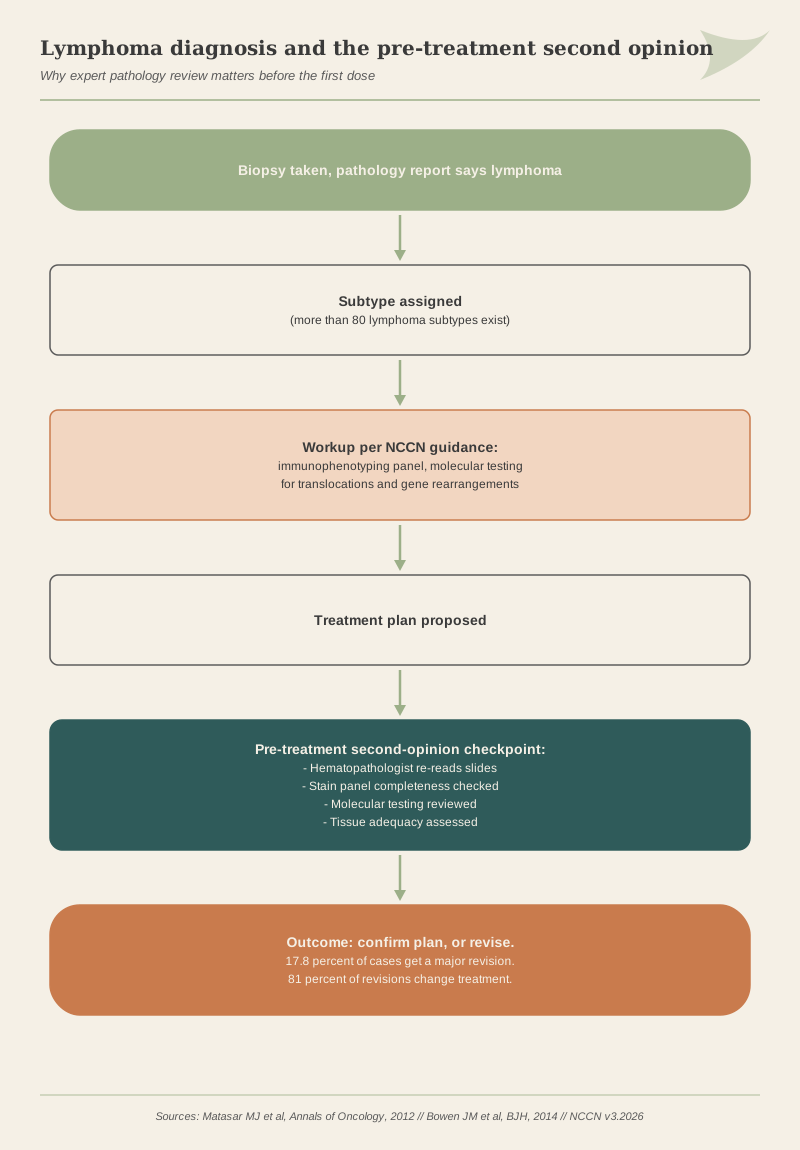
Hematopathologists at Memorial Sloan Kettering Cancer Center reviewed every lymphoma case sent to them for a second pathology opinion across two six-month periods. In the first period, expert review resulted in a major diagnostic revision in 65 of 365 cases, or 17.8 percent. In the second period the rate was 16.4 percent. That means roughly 1 in every 6 lymphoma diagnoses, when re-read by a specialist hematopathology team, changed in a way significant enough to alter how the disease was understood. The work was published in Annals of Oncology by Matasar and colleagues.
A separate 2014 study looked at what a revision actually changes. Bowen and colleagues at the University of Nebraska Medical Center, publishing in the British Journal of Haematology, reviewed 1,010 lymphoma biopsies referred to them for a mandatory second read. The diagnosis was unchanged in 861 of them. In 149 cases, about 15 in every 100, expert review produced a major diagnostic change, and in 131 of those 149 the change would have altered the patient's treatment. That is roughly 88 in every 100 revised diagnoses. Revision rates were highest for follicular, high-grade B-cell and T-cell lymphomas, and higher for biopsies first read outside an academic centre. The first read is rarely wrong about cancer being present. The question expert review answers is whether the cancer in front of you has been correctly classified.
T-cell lymphomas, which are the less common but more clinically tricky cousin of B-cell lymphomas, are an even sharper example. In a 2014 study by Herrera and colleagues published in Cancer, peripheral T-cell lymphoma cases referred to centres within the National Comprehensive Cancer Network (NCCN) showed a discordance rate of 36 percent between the referring institution's final diagnosis and the central expert review. More than 1 in 3 T-cell lymphoma diagnoses changed at the central read.
Why does this gap exist? Three reasons stand out in the literature. First, lymphoma pathology has become more granular over the last two decades. The current NCCN B-cell lymphoma guidelines, version 3.2026, require subtype-specific immunophenotyping panels (the stains that reveal which proteins sit on the surface of cancer cells) and, in many cases, molecular testing for translocations and gene rearrangements. Not every pathology laboratory has the same access to the same stains or the same molecular panels.
Second, lymphoma subtypes can look very similar under the microscope to a general pathologist while behaving very differently in the body. A subtype called diffuse large B-cell lymphoma and another called Burkitt lymphoma can share visual features but require very different treatment intensities. Telling them apart is a known diagnostic challenge in the literature, and it benefits from a pathologist whose entire practice is lymphoma.
Third, tissue adequacy matters. A small biopsy may be enough to confirm cancer is present but not enough to confirm exactly which subtype. Expert hematopathology review often surfaces the question of whether the sample on hand is sufficient to support the planned treatment, or whether an additional biopsy or different testing would be appropriate before starting therapy.
For more on the broader picture of how a U.S. specialist review can change oncology outcomes, see Tidbit's article on how U.S. oncologists change cancer treatment outcomes and the related piece on which cancer types benefit most from a U.S. second opinion.
What this means for your case
If a family member has been diagnosed with lymphoma and treatment has not yet started, this is the window in which an expert pathology second opinion has the most leverage. The literature is clear: the cases where a second read changed something were almost always the cases where the second read happened before therapy was committed.
Questions worth asking the treating oncologist include:
- check_circleWhat is the exact subtype of lymphoma on the pathology report?
- check_circleWas the immunophenotyping panel complete for this subtype, or are additional stains worth running?
- check_circleWere molecular tests (for example, translocations or gene rearrangements) performed where the guidelines recommend them?
- check_circleHas the pathology been reviewed by a hematopathologist whose primary focus is lymphoma, or by a general pathologist?
- check_circleIs the tissue sample on hand adequate to confirm the subtype, or might an additional biopsy be appropriate before starting treatment?
These questions confirm the foundation of the treatment plan rather than challenge the treating oncologist's judgement. A subspecialty pathology second opinion is one of the few places in oncology where a written review by an expert can be obtained in a matter of days, before the first treatment cycle begins.
What a subspecialist review evaluates
A hematopathology second-opinion review is a clinical process, not a paperwork exercise. The reviewing specialist requests the original pathology slides (or digitised images), the immunostain panel that was run, any molecular testing results, the imaging that was done at staging, and the clinical summary. They re-cut and re-stain where the original material is available and adequate, and they read the slides themselves rather than relying on the original report.
The review evaluates four things: whether the broad diagnosis of lymphoma is supported by the pathology, whether the specific subtype assigned matches what the slides actually show, whether the workup performed was adequate for that subtype per current NCCN guidance, and whether the proposed treatment plan is consistent with the actual disease as classified.
The output is a written report that the patient and the treating oncology team can use to either confirm the existing plan with higher confidence or revisit specific elements before therapy begins. Where the subtype changes, the report explains the basis for the new classification and references the guideline-recommended treatment pathway for that subtype. Where the subtype is confirmed, the report says so plainly, which is often as valuable as a revision because it lets the family move forward without lingering doubt.
For context on Tidbit's broader subspecialty review service across oncology, see Tidbit's oncology service overview.
Closing
Lymphoma is rarely a single straightforward diagnosis. The label is the easy part. The subtype, the stains, the molecular findings, and the match between pathology and treatment plan are the parts that change what happens next. In a meaningful share of cases, an expert second pathology opinion finds something different from the first read, and in most of those cases the difference matters enough to change the treatment plan.
Tidbit Health offers educational pathology and treatment-plan review of existing lymphoma records by U.S. board-certified hematopathologists and hematologic oncologists, returned in writing within 14 days. The review evaluates the original pathology, the workup, and the proposed treatment against current NCCN guidance.
If you would like a written specialist review of your lymphoma records before treatment begins, start at tidbithealth.in.
Educational review only. Not a replacement for an in-person physician relationship. Not for emergencies.
Sources & References
- 1Matasar MJ, Shi W, Silberstien J, et al. Expert second-opinion pathology review of lymphoma in the era of the World Health Organization classification. Annals of Oncology. 2012;23(1):159-166.
- 2Herrera AF, Crosby-Thompson A, Friedberg JW, et al. Comparison of referring and final pathology for patients with T-cell lymphoma in the National Comprehensive Cancer Network. Cancer. 2014;120(13):1993-1999.
- 3Bowen JM, Perry AM, Laurini JA, et al. Lymphoma diagnosis at an academic centre: rate of revision and impact on patient care. British Journal of Haematology. 2014;166(2):202-208.
Frequently Asked Questions
How often does expert pathology review change a lymphoma diagnosis?
expand_more
In a 2012 Memorial Sloan Kettering study published in Annals of Oncology by Matasar and colleagues, expert second-opinion pathology resulted in a major diagnostic revision in 17.8 percent of lymphoma cases. A separate 2014 study by Bowen and colleagues in the British Journal of Haematology reviewed 1,010 referred lymphoma biopsies and found that where expert review produced a major diagnostic change, 131 of those 149 changes would have altered treatment.
What is the difference between B-cell and T-cell lymphomas?
expand_more
B-cell and T-cell lymphomas arise from different immune-system cells and are treated with very different regimens. T-cell lymphomas are less common but have a notably higher diagnostic discordance rate. A 2014 NCCN study in Cancer found 36 percent discordance between referring institution diagnoses and central expert review for T-cell lymphoma cases.
What does a hematopathology second opinion actually evaluate?
expand_more
The reviewing specialist re-reads the original slides (or digitised images), checks the completeness of the immunophenotyping panel for the assigned subtype, reviews any molecular testing results, evaluates tissue adequacy for the planned treatment, and assesses whether the proposed therapy matches current NCCN guidance for that exact subtype.
When in the lymphoma journey is a second opinion most useful?
expand_more
Before treatment begins. The published literature shows the strongest impact when the second pathology read happens before therapy is committed. After treatment has started, a review can still inform mid-course decisions, but the window for reclassification and a different first-line regimen has narrowed.
Does a second opinion mean my oncologist was wrong?
expand_more
No. The first diagnosis is rarely wrong about cancer being present. The question a hematopathology second opinion answers is whether the specific subtype assigned matches what the slides show and whether the planned treatment is built for that exact disease. The questions confirm the foundation of the plan rather than challenge the treating oncologist's judgement.
Ready to get a U.S. specialist's view of your case?
Hematology and Oncology Second Opinion Review
